
Chickenpox (Varicella)
Chickenpox (Varicella)
Overview
Chickenpox is a primary infection with the varicella-zoster virus (VZV). It is highly contagious and usually self-limiting in healthy children but can be severe in adults, pregnant people, neonates, and those who are immunocompromised.
Incubation 10–21 days (≈14 typical)
Infectious period~24 h before rash → all lesions crusted
Transmission: Respiratory droplets/aerosols; direct contact with vesicle fluid
Clinical Features
Prodrome
- Fever, malaise, headache, ± upper-respiratory symptoms (more evident in older children/adults).
Rash
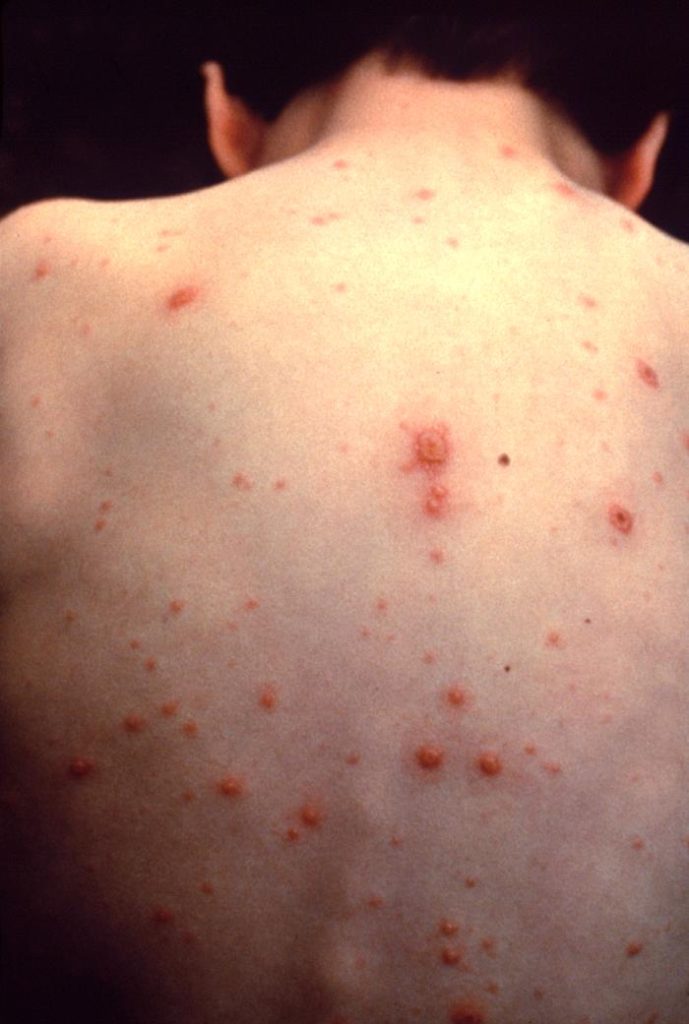
- Macules → papules → clear vesicles → pustules → crusts; lesions appear in crops with multiple stages visible concurrently.
- Usually starts on scalp/trunk, spreads to face and limbs; mucosal involvement can occur.
- Intensely pruritic.
Differential diagnosis
Hand-foot-mouth disease, impetigo, insect bites, disseminated zoster, eczema herpeticum, measles (if coryza/conjunctivitis/Koplik’s spots), drug eruption.
Assessment & Investigations
- Clinical diagnosis in routine cases; investigations are rarely required in immunocompetent children.
- Consider VZV PCR from vesicle fluid or serology (IgG/IgM) if atypical, severe, pregnancy, neonate, or immunocompromised.
- Assess for complications: secondary bacterial infection, pneumonia, CNS involvement, dehydration.
Management
Supportive care (most cases)
- Fluids, rest, loose clothing; maintain skin hygiene.
- Antipyretic: paracetamol as needed.
- Pruritus relief: oral antihistamines (e.g., chlorphenamine at night if appropriate), topical emollients/calamine, oatmeal baths.
- Avoid scratching; keep nails short to reduce secondary infection.
- Avoid NSAIDs in children due to possible association with severe skin/soft-tissue infection.
Antivirals (selected cases)
- Not routinely indicated in otherwise healthy children with uncomplicated disease.
- Consider oral aciclovir if started within 24 hours of rash onset in immunocompetent adolescents/adults at higher risk of complications.
- Use antivirals promptly (and consider IV therapy) for severe disease, immunocompromise, or complications—seek specialist advice.
Special groups
- Pregnancy: urgent risk assessment (immune status, exposure timing). Consider VZV serology, VZIG where indicated, and early antiviral therapy; involve obstetrics/ID.
- Neonates: exposure near delivery or maternal primary infection warrants neonatal team input ± VZIG/antiviral per local protocol.
- Immunocompromised: manage with specialist guidance; lower threshold for antivirals/IV therapy and admission.
Prevention
Vaccination
- Varicella vaccine available in the UK for specific groups (e.g., non-immune healthcare workers, close contacts of vulnerable patients) — check local policy.
- Two doses recommended; breakthrough infections tend to be milder.
Post-exposure prophylaxis (PEP)
- For eligible high-risk contacts (pregnant, neonates, immunocompromised): consider VZIG and/or antiviral prophylaxis as per UKHSA/local guidance.
- Time-critical: ideally within 96 hours of significant exposure.
Red Flags & Referral
- Persistent high fever, severe lethargy, or dehydration.
- Respiratory distress, chest pain, haemoptysis (suspect pneumonia).
- Neurological symptoms: severe headache, confusion, ataxia, seizures (suspect encephalitis/ataxia).
- Rapidly worsening skin pain, swelling, erythema, or necrosis (secondary bacterial infection).
- Any severe disease in pregnancy, neonates, or immunocompromised patients.
Infection Control & Exclusion
- Exclude from school/work and from contact with susceptible high-risk individuals until all lesions are crusted.
- Follow local occupational health policy for healthcare workers.
This content is for education and does not replace clinical judgement. Consult local guidelines and medicines information before prescribing.